The inscriptions retain distinctions that disappear when the cemetery is described simply as “Italian.” They identify particular towns of birth, name relatives and recount different circumstances of death. Their wording also varies. Some commemorate the deceased through praise, others emphasize the suffering of survivors, and several invite readers to participate through prayer.
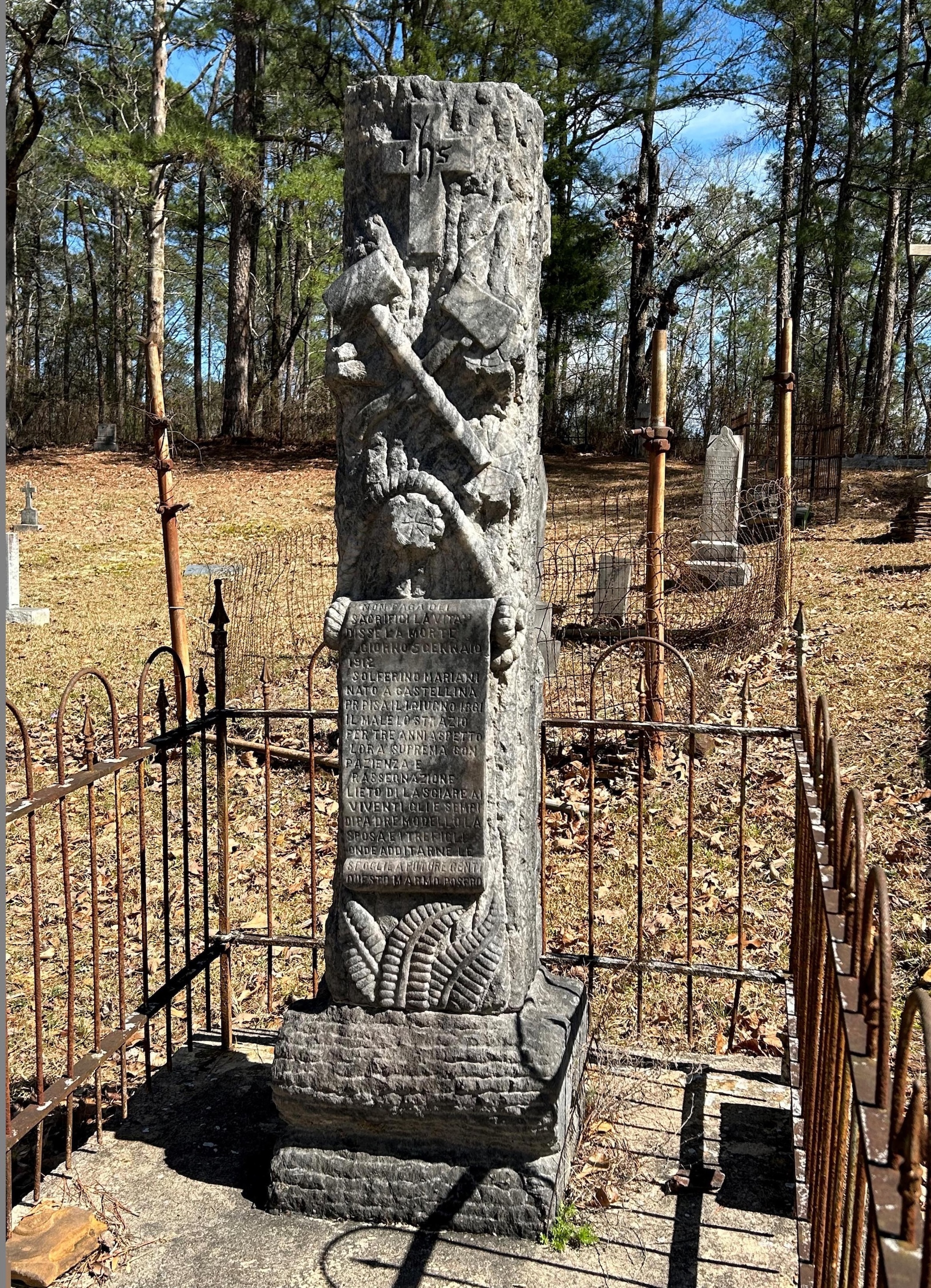
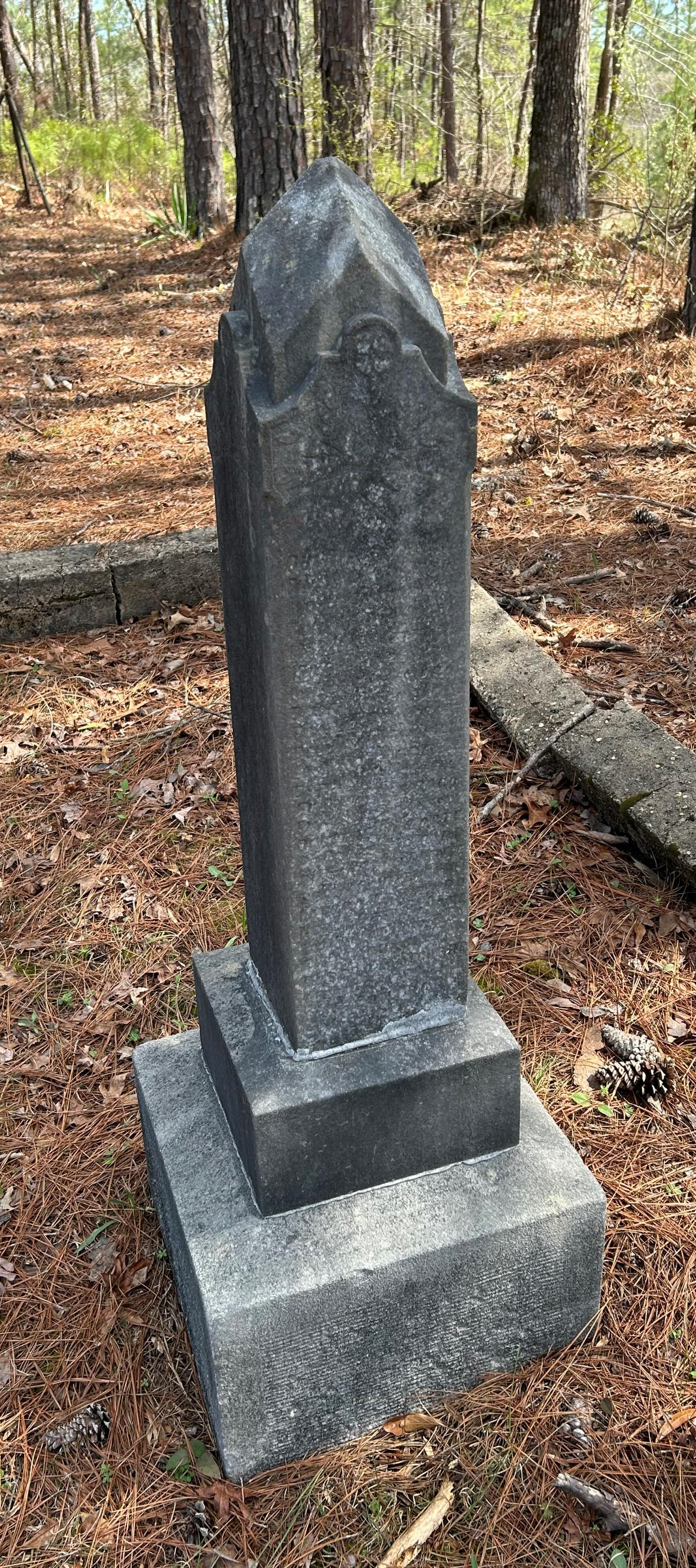
Solferino Mariani’s epitaph recalls the three years of illness that preceded his death, praising the patience and resignation with which he endured his suffering. It remembers him as a model father and names the wife and three children he left behind. The inscription presents these final years through the language of Catholic devotion, in which patience in suffering was regarded as a virtue. Mariani’s responsibilities as a husband and father are equally prominent, suggesting how his family wished him to be remembered.
His monument is among the most elaborate in the cemetery. Sculpted as a tree trunk, it bears a cross, foliage and tools associated with manual labor. The axe and other implements may refer to Mariani’s occupation, possibly as a woodworker, although his precise trade remains unconfirmed. The tree-trunk form also belongs to a wider tradition of funerary sculpture in which trees evoke the passage of life and its interruption by death. The monument thus preserves several aspects of Mariani’s identity: his work, his Catholic faith and the family whose grief is recorded in the inscription.
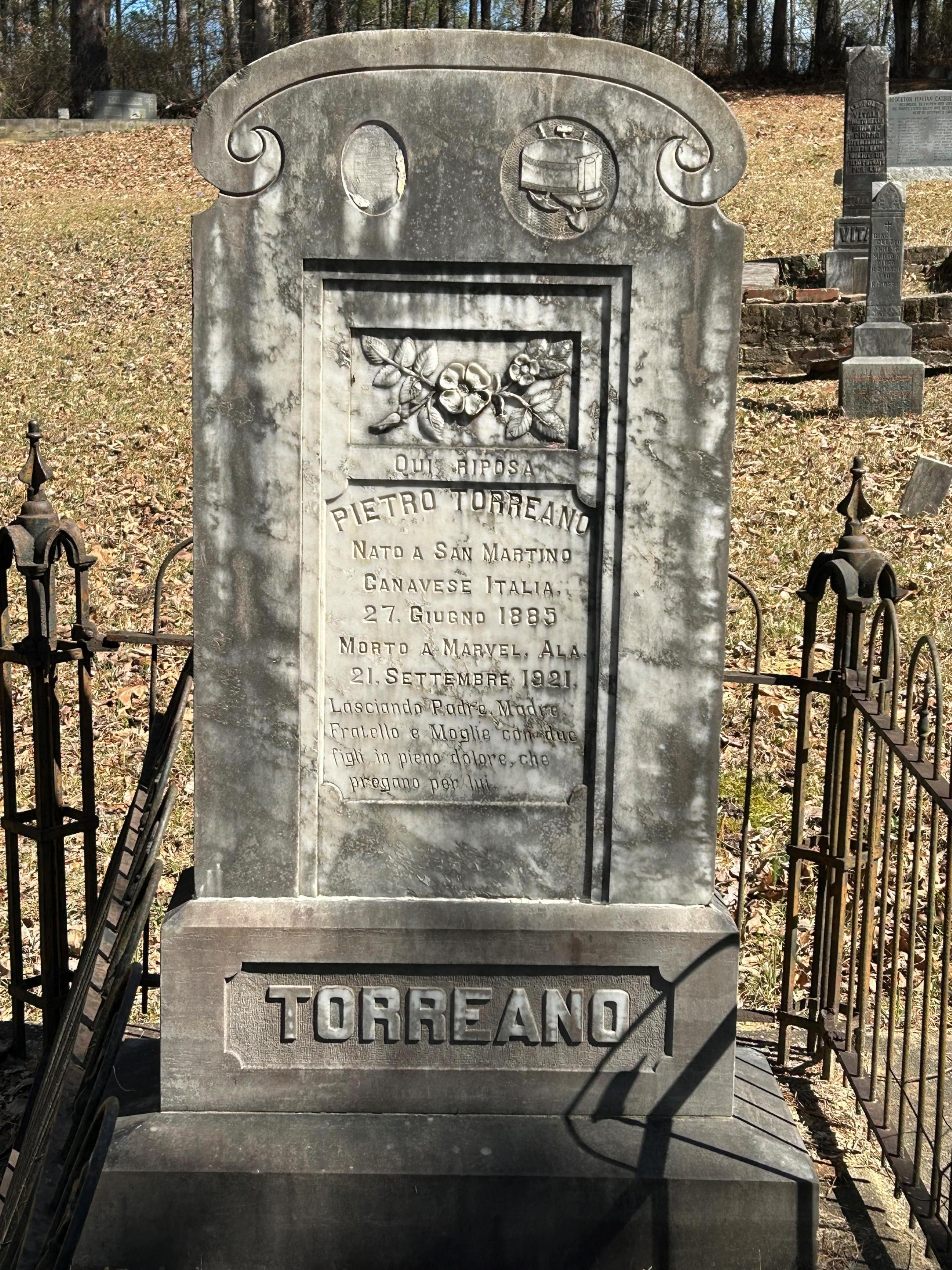
Pietro Torreano’s epitaph connects San Martino Canavese, where he was born on 27 June 1885, with Marvel, Alabama, where he died on 21 September 1921. The Canavese, north of Turin, was an important area of emigration during the late nineteenth and early twentieth centuries, sending workers abroad in search of employment. Marvel, in turn, was a coal-mining settlement in central Alabama. Torreano’s gravestone preserves a connection between two places belonging to the wider history of Italian labor migration.
His father, mother, brother, wife and two children are remembered in the inscription as mourning his death and praying for him. Their presence in the epitaph reflects the importance of family relationships and Catholic devotional practices within migrant communities. Although the inscription does not establish where each relative lived, the collective expression of grief suggests ties that could endure despite geographical separation. The request for prayer also places the deceased within a continuing relationship with the living, who were expected to remember him and intercede for his soul.
A floral carving occupies the upper part of the monument. Flowers were common in nineteenth- and early twentieth-century funerary art, where they frequently represented the fleeting nature of earthly life. Blossoms in full bloom could evoke someone who died in adulthood, while unopened buds were often associated with lives cut short in youth. In Torreano’s case, the flowering branches offer a fitting image for a man who died at thirty-six, still in the prime of life. The combination of floral decoration, family remembrance and Catholic prayer gives the monument both a personal and a religious character.
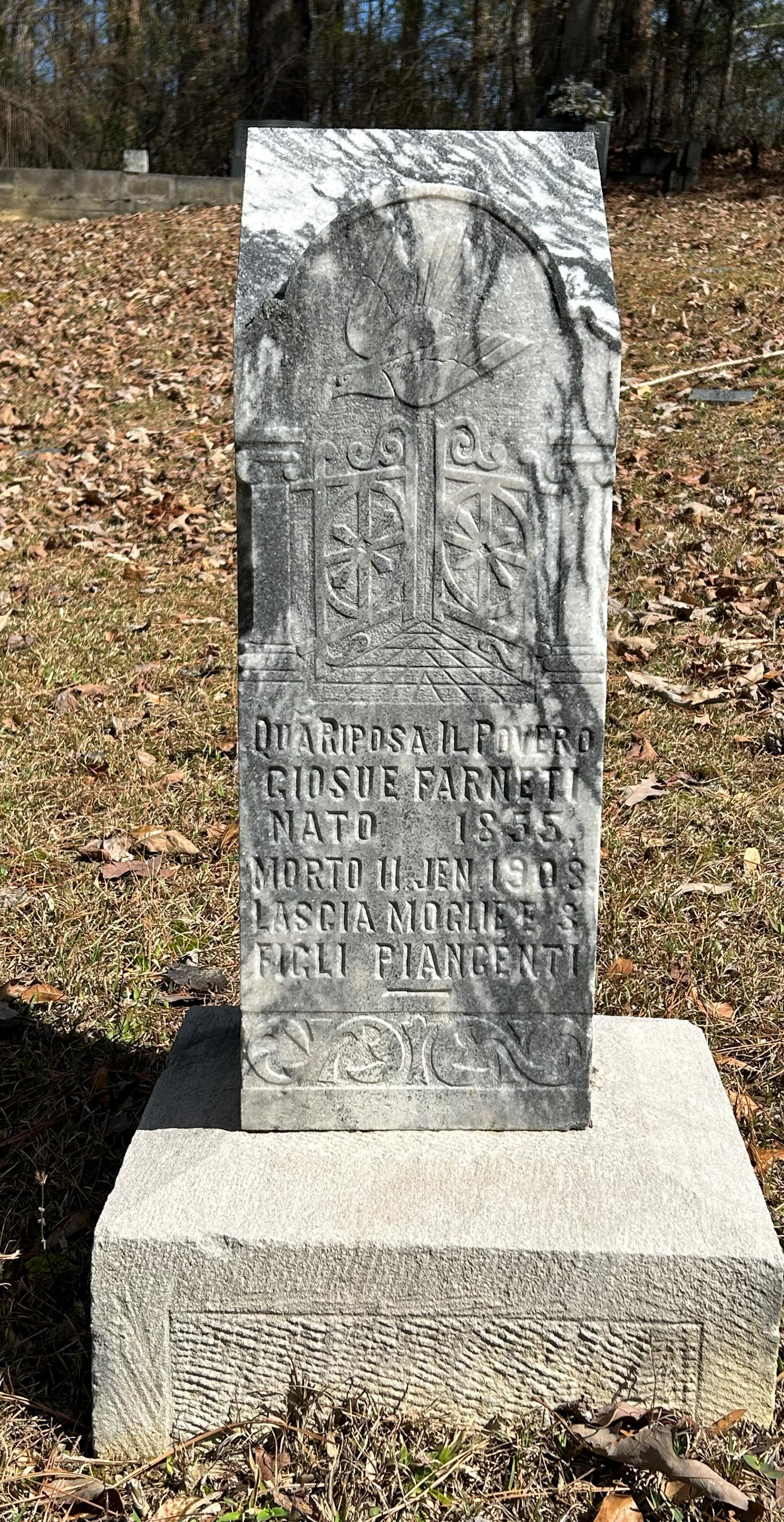
The gravestone of Giosue Farneti (1855–1908) is distinguished by a pair of open gates surmounted by a dove in flight. The gates belong to a familiar tradition of Christian funerary imagery, representing the entrance to heaven and the passage from earthly existence to eternal life. Their open position suggests the hope that the deceased will be admitted into God’s presence. The dove, associated in Christian iconography with the Holy Spirit, peace and the soul, reinforces this expectation of salvation and heavenly rest.
The inscription identifies Farneti and records the wife and three children he left “piangenti” (weeping). Their grief is expressed in the conventional language of Italian Catholic mourning, which frequently placed surviving family members at the center of commemorative inscriptions.
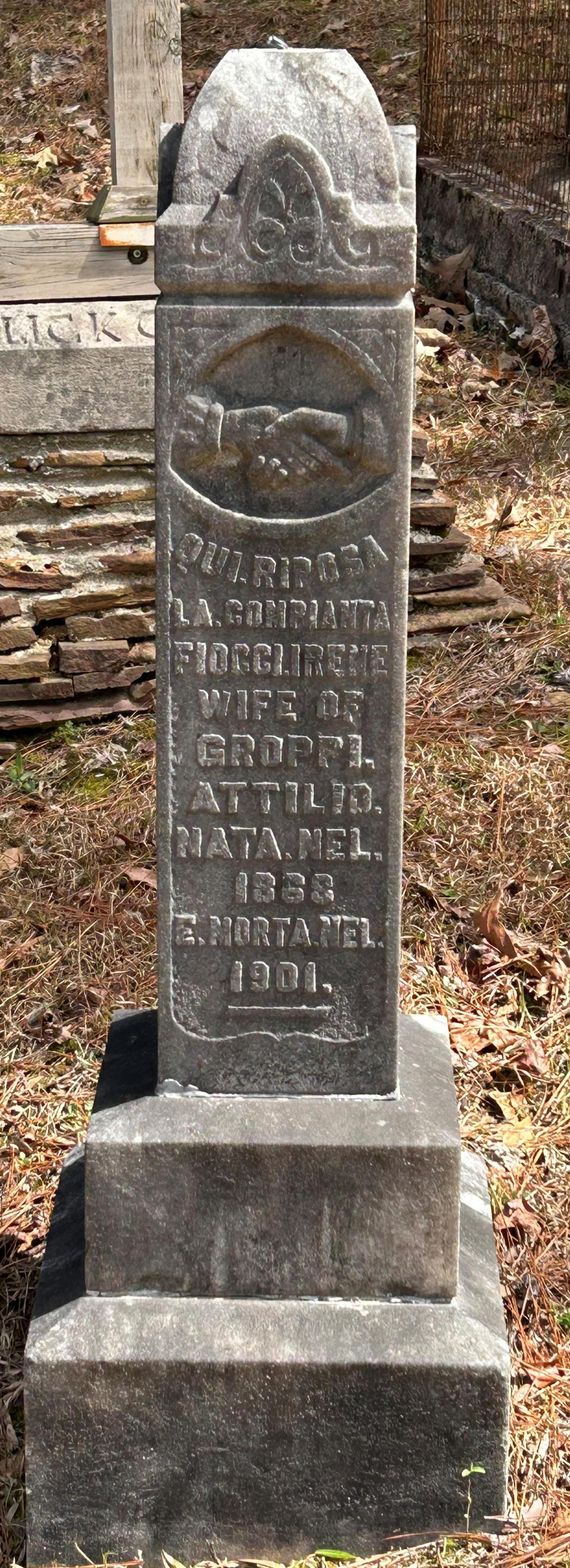
The handshake carved above Irene Fiocca’s epitaph symbolizes the deceased’s welcome into the heavenly world. The relative size of the hands and the decorative details of their sleeves could give this motif a further possible meaning, indicating marriage, friendship or the bond between parent and child. On Fiocca’s gravestone, the inscription naming her husband, Attilio Groppi, suggests that the gesture may also allude to their marriage.
Fiocca’s otherwise Italian epitaph contains a brief English insertion (“wife of”). Here, as on other gravestones in the cemetery, the use of both languages reflects the linguistic and cultural mixture that was becoming part of immigrant life in Alabama. Some later gravestones would carry inscriptions written entirely in English.
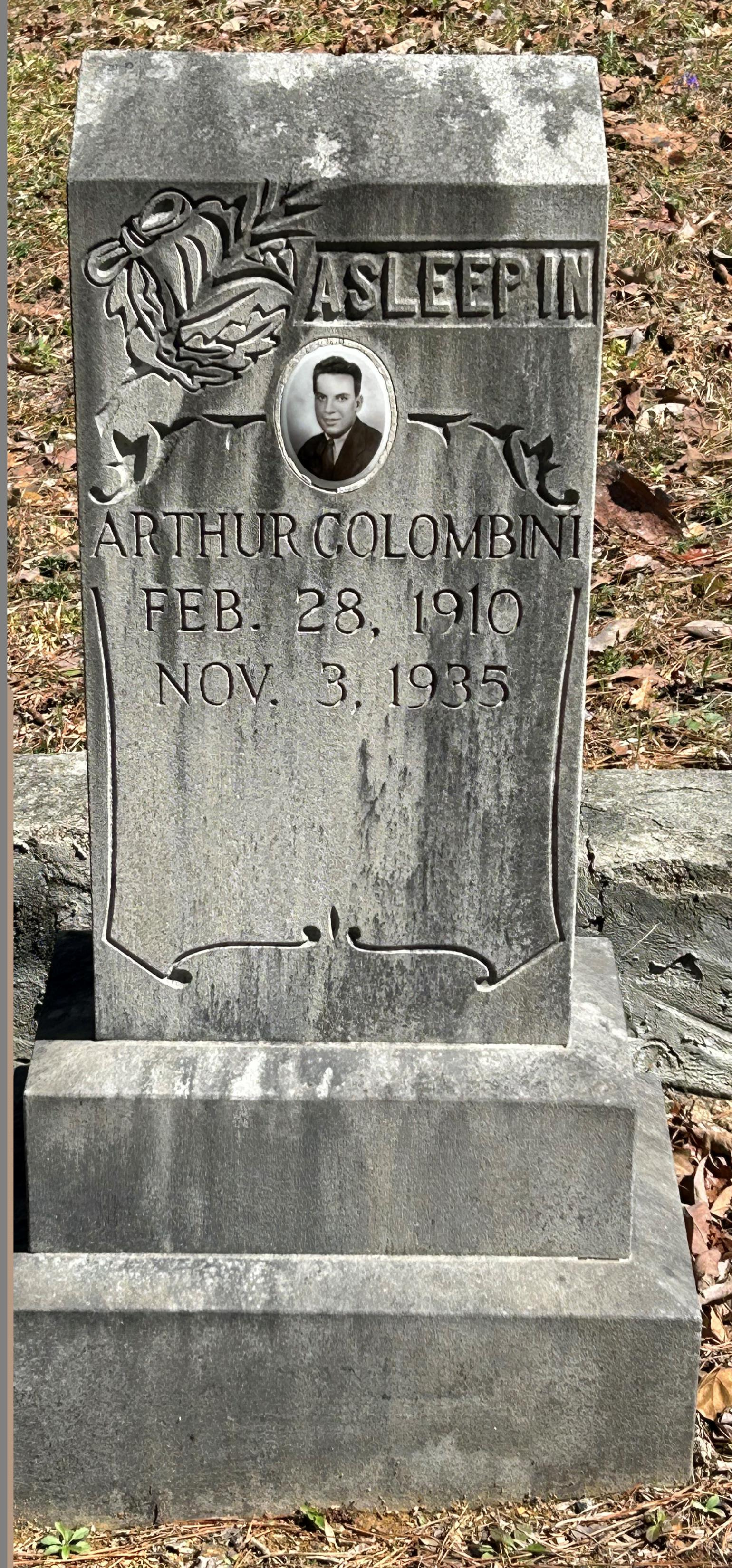
Arthur Colombini’s gravestone carries a brief English inscription and an inset photographic portrait. Born on 28 February 1910, he died on 3 November 1935, aged twenty-five. His photograph preserved a likeness familiar to relatives and friends, which could also be passed on to generations who had never known him. Including it on the grave made his appearance a lasting part of the family’s remembrance.
The portrait and lettering occupy only part of the stone, leaving much of the carved scroll beneath them unfilled. This relatively spare arrangement differs from the lengthy tributes to Mariani and Torreano, with their accounts of suffering, personal virtues and grieving relatives. Colombini’s memorial offers no comparable narrative. Here, the photograph takes on greater importance: remembrance rests on a few biographical details and the image of the young man, rather than on an extended account of his character or the circumstances of his death.
Matteo Contri’s gravestone is so badly weathered that its inscription is now virtually illegible. A traditional fieldwork technique – a rubbing made on paper with a blue crayon – allowed much of the surviving lettering to be recovered and the circumstances of his death to be reconstructed. A partial transcription of the upper portion of the epitaph accompanies the rubbing reproduced below, preserving an account that can no longer be read directly from the stone.
Contri came from Fanano, in the Modenese Apennines, a mountain district with a long history of emigration. Like many others who left these communities, he had travelled to Alabama in search of work and a better livelihood. His epitaph describes the explosion that killed him while he was working in a mine, before he could return home to his family. Although the mine has not yet been identified, the inscription conveys the tragedy of a working day that ended in death rather than the expected reunion with his loved ones. Such accidents were an ever-present danger in the mining settlements, where entire families depended on the wages earned underground.
Other graves in the cemetery commemorate workers killed in similar circumstances, including Pietro Castelli, whose death in a mining disaster is examined later in this exhibition through his epitaph and contemporary newspaper reports. The dangers of physical labor were not confined to the mines, however. Elviro Di Laura, editor of Il Gladiatore and the Columbus–Balbo Review, was killed by a falling tree while working at the Red Mountain site being prepared for Giuseppe Moretti’s statue of Vulcan. His death connects a prominent figure in Birmingham’s Italian press with the physical labor involved in establishing the monument’s new setting, another example of the risks faced by those who worked in the industrial district.
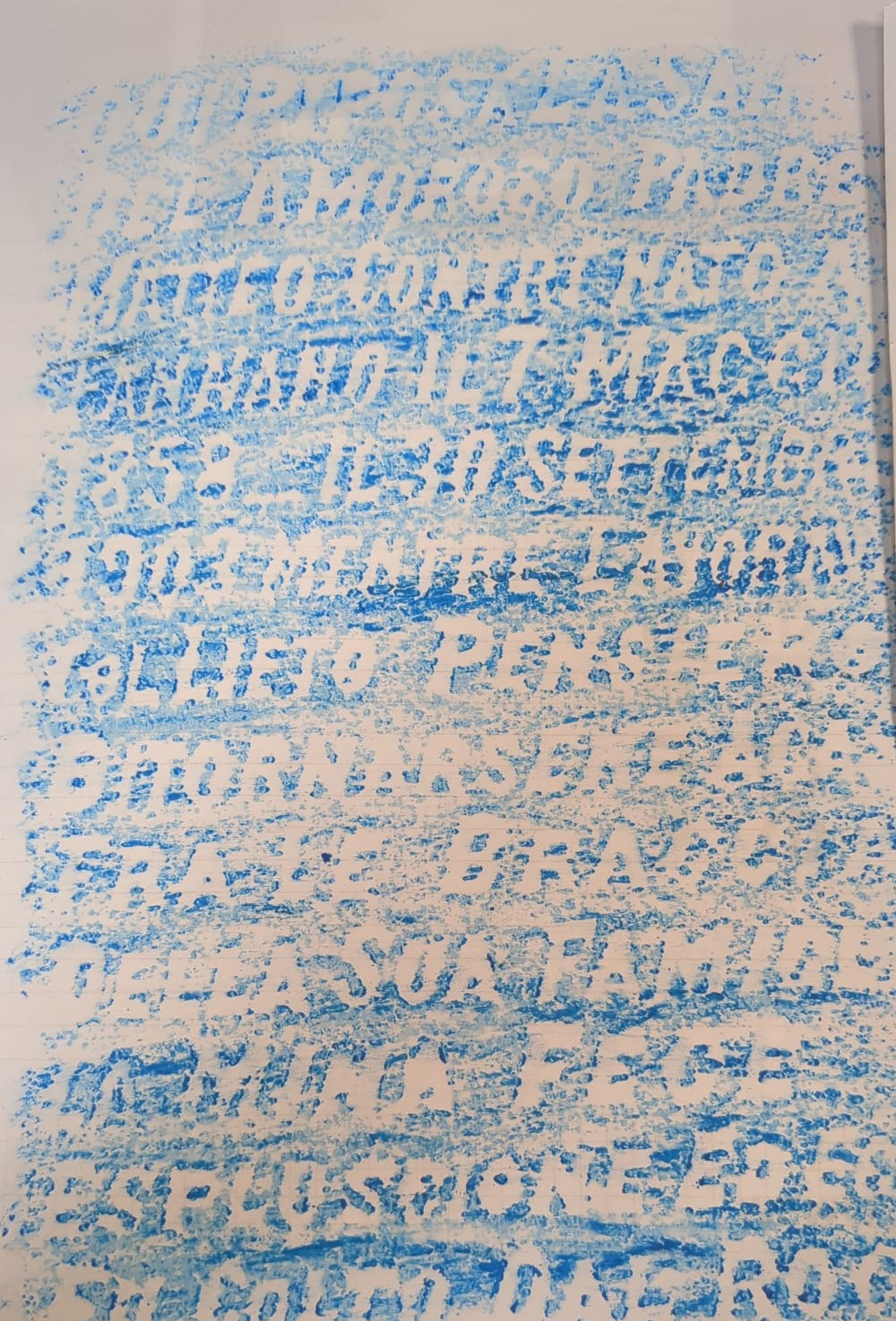
The partial transcription of the upper part of the gravestone reads
“Qui riposa la salma di Matteo Contri nato a Fanano il maggio 1858 mentre lavorava col lieto pensiero di tornarsene a casa tra le braccia della sua famiglia la mina fece esplosione ed egli fu colto dal rogo”
The epitaph’s rhetoric moves between pathos and an almost heroic tribute to the worker, emphasizing the brutality of his death while expressing the anguish of the family he left behind.


