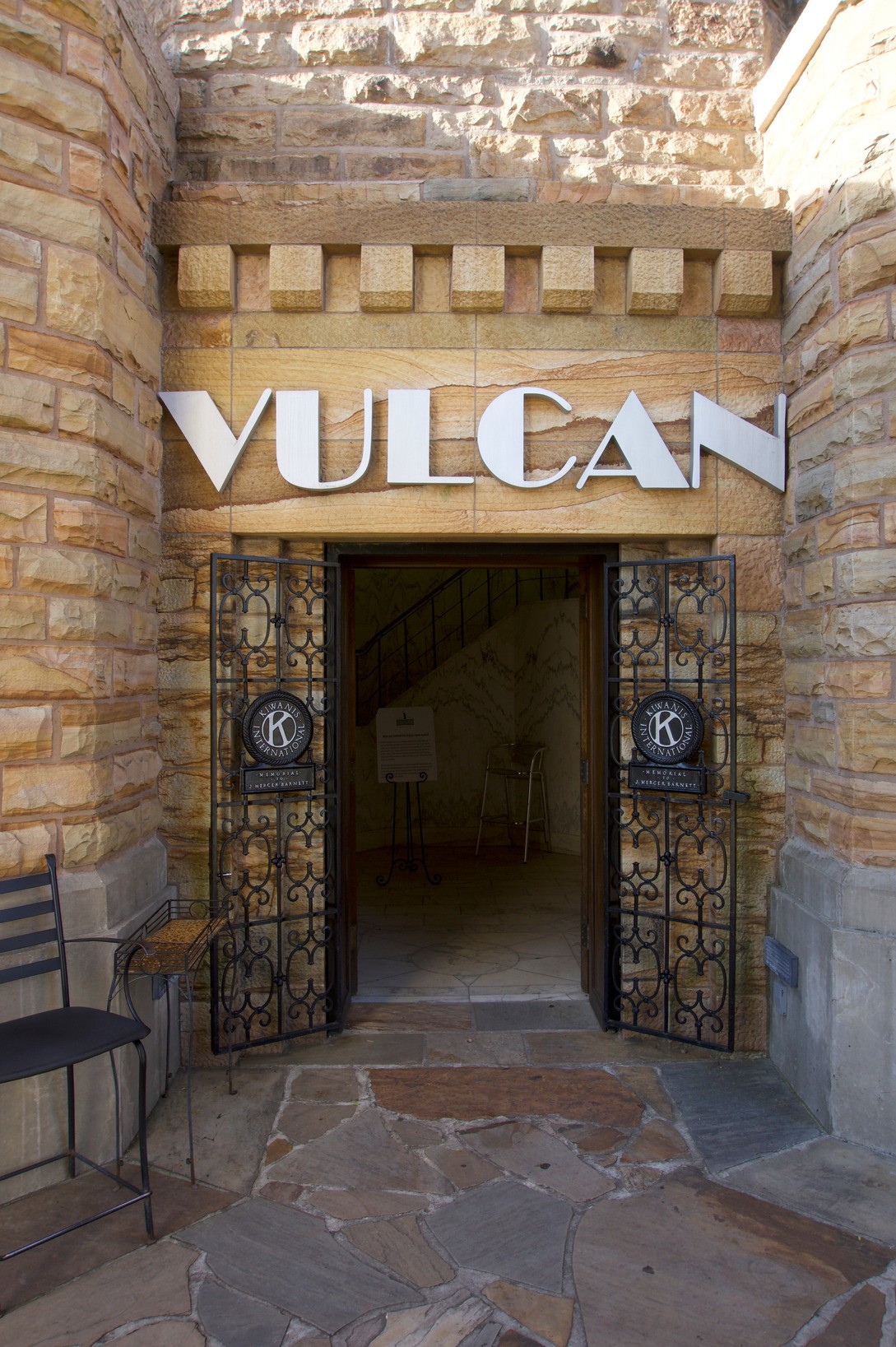
At the start of the twentieth century,Birmingham was a booming New Southindustrial center. With the 1904 St. Louis World’s Fair approaching, journalist and promoter James MacKnight had the idea for an exhibit that could represent the Birmingham District’s industrial might – a giant man of iron.
Armed with the support of the Commercial Club (today’s Chamber of Commerce), MacKnight went looking for an artist to help realize his vision and found the inspired Italian-born sculptor Giuseppe Moretti, who accepted the challenge to create a 56-foot iron statue in a few short months. This would make Moretti's Vulcan the largest cast-iron statue in the world.
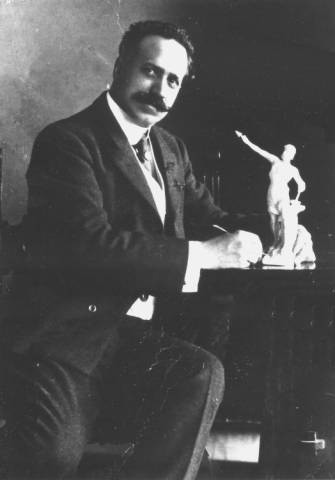
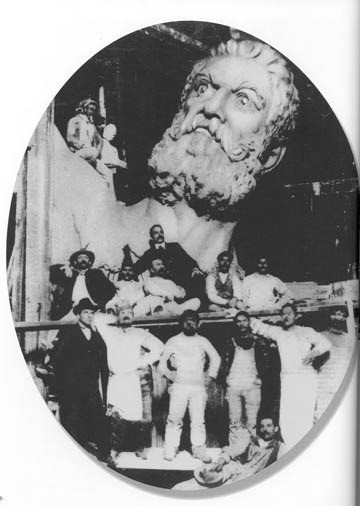
After Moretti’s design was approved, he moved ahead quickly, building a full-sized clay model in upper and lower halves from which plaster casts were created. He shipped the plaster pieces from New Jersey to Birmingham by rail, then traveled there to oversee the casting. Due to the vast scale, short schedule, and intricate detail, the casting process was one of the most challenging ever undertaken in the city.
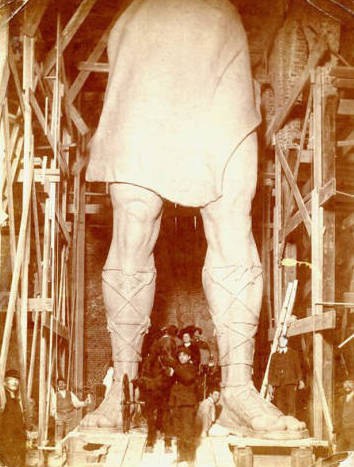
Vulcan was cast from Sloss pig iron at Birmingham Steel and Iron Company. Foundry workers spent weeks on elaborate preparations, which included digging an enormous hole in the middle of the foundry floor to accommodate the large pieces. Around each piece, foundry workers built molds out of brick and loam (a sticky mixture of clay and sand). Then they baked the molds to harden them and finally assembled all the pieces around a core. The space in between was then filled with molten iron.
Hardworking Birminghamians cast the statue’s parts in less than three months, working long hours every day and spending the nights at the factory in order to complete the job on time for the fair.
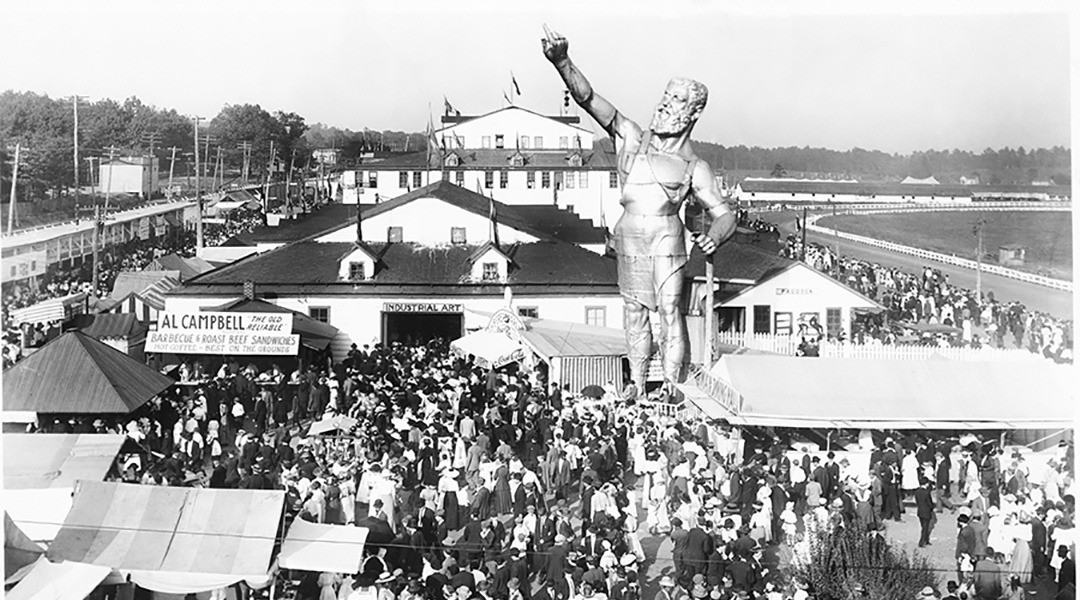
After the fair, Vulcan returned to Birmingham, and in October 1906, it was temporarily assembled at the Alabama State Fair Grounds with his arm on backwards, where he stood for the next thirty years. Moretti would later express his unhappiness with the disrespect shown to the statue, for he did not feel that it did justice to the model he had made. Moretti did not live to see his work installed in a place of honor on Red Mountain, overlooking Birmingham, at Vulcan Park, which opened May 13, 1939.
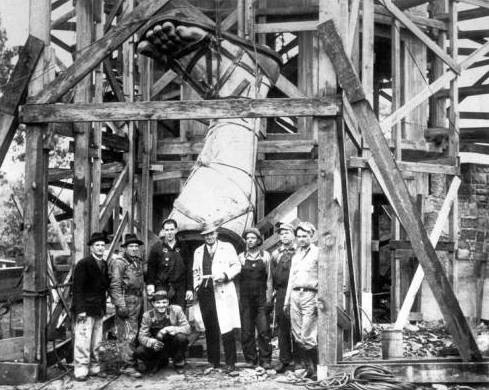
In October 1999, a badly weathered Vulcan was removed from its pedestal for extensive restoration. By October 2001, the Vulcan Park Foundation had raised sufficient funds to begin the project. The whole of Vulcan Park, once created with the vital contribution of Italian stonecutters and masons, also underwent a major overhaul in 2002.
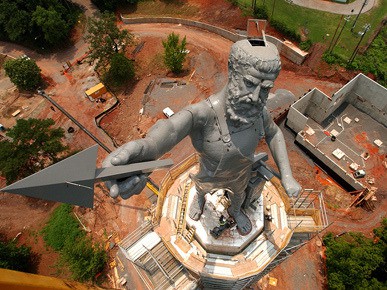
The statue was reinstated in 2003. In accordance to Giuseppe Moretti’s original artistic intent, it was positioned about 15 degrees east, so that the anvil and the base of the pedestal would be closer to his left side rather than behind him. A new hammer and a spearpoint were also cast. On June 23, 2003, about one year before his 100th birthday, the Roman god of fire and forge once again pointed to the horizon over Birmingham, a memento of the city's past and present economic strength, and a southern homage to the colossus's Italian "father".